 CENTRAFLOW
Annular flow redistribution for challenging cement placement.
CE-BOND is designed to reduce circumferential velocity imbalance in deviated, eccentric annuli and support improved low-side displacement when used with conventional centralizers.
Centralizers improve standoff, but residual low-side displacement risk can remain.
In deviated wellbores, casing often sits eccentrically despite centralization. Displacement fluids preferentially flow through the wider high side of the annulus, while the restricted low side can remain poorly swept. This can leave mud, solids or contaminated fluid behind the casing and increase the risk of a low-side cement channel.

- 01Eccentric annulus
Even with centralizers, the casing may remain offset from the hole centreline. This creates a wide high-side flow path and a restricted low-side annular gap.
- 02Preferential high-side flow
During displacement, fluids naturally follow the path of least resistance. The high side receives most of the flow, while the low side sees reduced velocity.
- 03Low-side channel risk
If mud, solids or contaminated fluid remain on the low side, cement may not fully replace the displaced fluid, increasing the risk of a continuous channel behind casing.
Redistribute annular flow where eccentricity creates the largest imbalance.
A series of CE-BOND diverters creates local flow redistribution around the casing. In eccentric annuli, displacement flow naturally favors the wider high side. CE-BOND introduces a controlled diversion effect, forcing part of the flow toward the restricted low side. When run in series with conventional centralizers, this increases low-side velocity and improves the probability of effective mud removal before cement placement.

Flow redistribution
CE-BOND redirects part of the annular flow from the high side toward the low side of the eccentric annulus.
Improved low-side sweep
The diverted flow helps mobilize mud, solids and contaminated fluid that can otherwise remain on the low side before cement placement.
Improved conditions for circumferential cement placement
Improved low-side displacement supports better circumferential cement coverage and reduces the likelihood of a continuous channel behind casing.
CE-BOND is not a centralizer replacement. It is an annular flow diverter, run with conventional centralizers.
Centralizers improve standoff. CE-BOND addresses the remaining flow distribution problem — the poor low-side displacement regime that standoff alone does not always correct. Good standoff design remains a requirement of every program.
Buoyancy-oriented to place the diversion effect on the high side.
CE-BOND uses buoyant elements — syntactic foam rated for downhole pressure — to orient the diverter toward the high side of the casing in deviated wellbores. This positions the flow diversion geometry so that annular flow is redirected toward the low side of the hole. Orientation should be reviewed against well inclination, casing rotation risk, centralizer program and job-specific running conditions.
Self orientation demonstrated physically.
The self-orientation mechanism requires no downhole activation.
Buoyancy helps orient CE-BOND toward the high side of the annulus.
CE-BOND uses buoyant material and asymmetric geometry to orient the tool toward the high side in deviated wellbores. The geometry increases resistance in the preferential high-side flow path, encouraging redistribution toward the low side. Application suitability is reviewed against inclination, geometry, fluid properties and operational constraints.
Physical testing and flow modelling support the same redistribution mechanism.
CE-BOND has been evaluated using physical flow-loop testing and annular-flow modelling. The two methods serve different purposes: the flow loop demonstrates displacement behaviour, while modelling supports mechanism understanding and application design.
Observe the displacement behaviour directly.
The test video demonstrates the effect of CE-BOND on low-side cuttings and debris removal under the tested geometry and flow conditions.

Typical information reviewed for a CE-BOND application.
CE-BOND application is evaluated against the specific well conditions and cementing objectives. Engineering review considers the factors that influence annular flow behaviour and displacement performance.
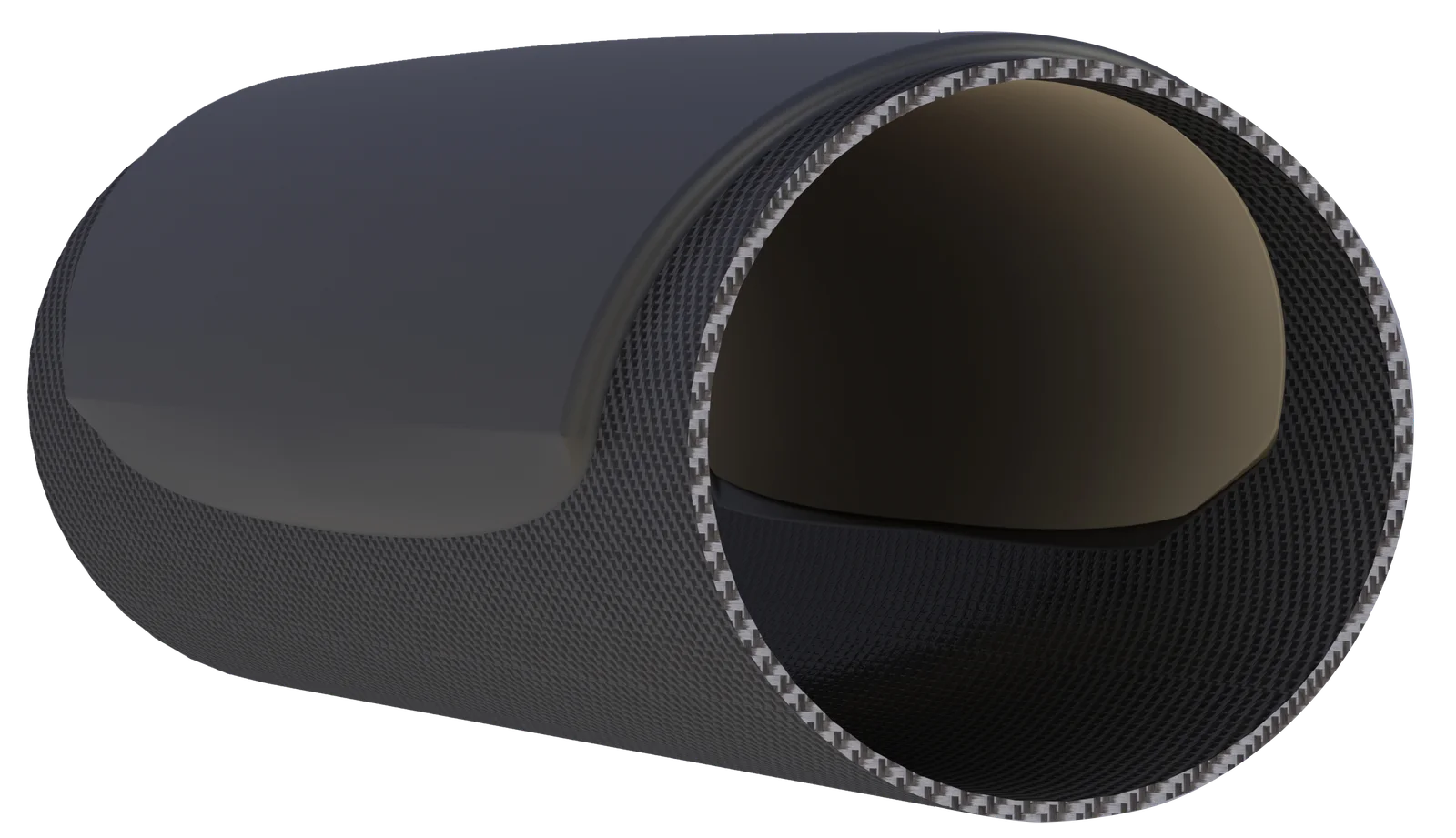
Designed against the actual casing, hole and cementing envelope.
Tool geometry, clearance, placement and hydraulic effect are reviewed for the specific application. The engineering assessment considers well geometry, centralization, fluids, displacement parameters and operational constraints to optimise the placement strategy.
Installed during casing preparation, with no downhole activation step.
CE-BOND is integrated into the casing programme based on the selected placement interval, running constraints and cementing objectives. Installation planning considers tool positioning, compatibility and operational requirements while maintaining conventional cementing practices.
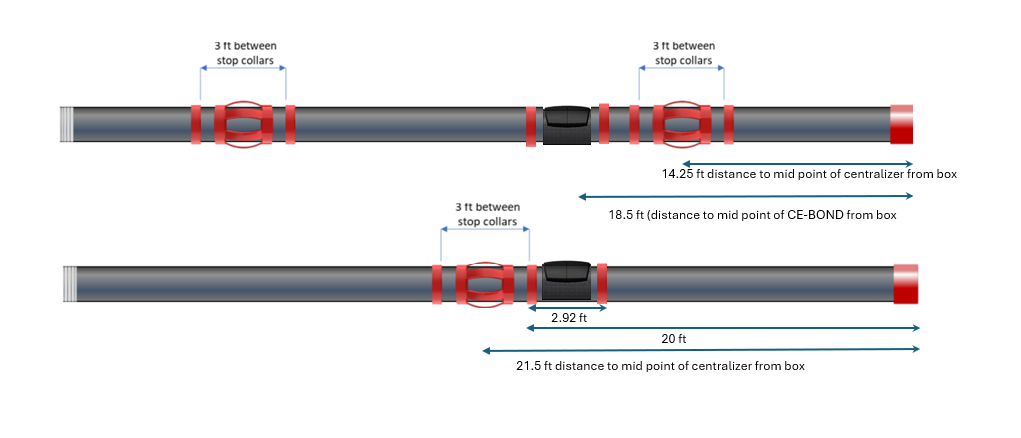
Run as part of the casing or liner string.
The tool has no powered, hydraulic or mechanically actuated components and requires no downhole activation. Clearance, runability and hydraulic effects are checked during the application review.


Applications where low-side displacement matters.
CE-BOND is applied where eccentricity and low-side displacement are recognized risks to cement placement and isolation.
Support low-side displacement
Improves low-side sweep in eccentric annuli where conventional displacement may leave mud or contaminated fluid behind casing.
Target the channel-prone intervals
Targets intervals where gravity, eccentricity and low-side solids retention increase channel risk.
Support challenging barrier cement placement
Potential application where annular cement placement is important to a planned barrier, subject to the operator’s barrier design and acceptance criteria.
Target recurring displacement risk
Applicable where offset wells or previous cement evaluation logs show recurring low-side channeling.
Run as part of the string
Designed for casing or liner deployment, subject to job-specific clearance, runability and hydraulic review.
The value is an additional hydraulic control for difficult cement placement.
CE-BOND is intended to address residual circumferential velocity imbalance in deviated, eccentric annuli. Its value is strongest where conventional centralization and displacement design still leave a recognized low-side placement risk.